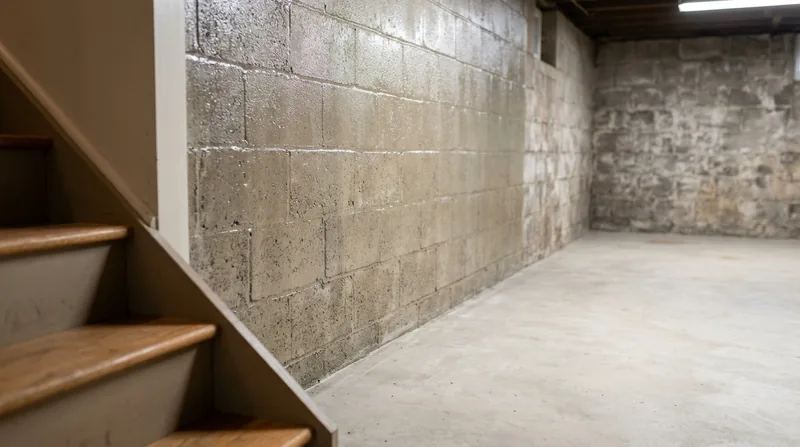




Louisville sits on the Ohio River floodplain and on limestone and shale with heavy clay soil, and that geology shows up in every basement in the metro. In Germantown and Schnitzelburg, 1880s brick shotgun houses sit on old stone foundations with shallow cellars that seep after every spring storm. In the Highlands and Crescent Hill, 1910s brick Tudors and bungalows have full basements where hydrostatic pressure pushes water through mortar joints. Out in Jeffersontown and Prospect, 1980s to 2010s subdivision homes have poured-concrete walls that crack along the cold joint. A Free Basement Inspection in Louisville gives you a straight answer about what is actually happening below grade before you spend a dollar on repairs. We walk the basement, check the walls, floor, cracks, sump system, grading and gutters, and hand you photos with a written explanation of what needs fixing now and what can wait. If nothing is wrong, we tell you that too. Call (502) 679-4421 to schedule, or read more about our basement waterproofing service first.
Why a Free Basement Inspection Matters in Louisville's Old and New Housing Stock
The failure mode that dominates this city is water arriving under hydrostatic pressure after heavy spring rain, not a single hairline crack that needs a tube of sealant. Louisville gets 45-plus inches of rain a year, and the clay soil around most foundations holds that water against the wall instead of letting it drain away. Add freeze-thaw winters that open mortar joints on old brick foundations and hillside runoff in neighborhoods like Anchorage and Prospect, and you get a metro where basement water is a matter of when, not if. An inspection tells you which problem you actually have.
- We check for efflorescence on the wall, which is the white salt bloom that proves water is moving through the masonry.
- We map every crack and note whether it is a shrinkage crack or a structural one that needs injection or carbon fiber straps.
- We test the sump pump and check the check valve, discharge line and basin for the failures that flood a finished basement.
- We look at grading and downspout extensions, because a downspout dumping water at the foundation corner undoes everything else.
- We inspect window wells and the footing drain where they are visible, since clogged weeping tile is behind a large share of wet basements in Beechmont and Hikes Point.
Every finding gets photographed and written down, so you are not relying on a verbal guess made in a dark corner.
Key info: In Portland and Butchertown, we routinely find 100-year-old brick foundations with no footing drain at all. The fix is usually an interior perimeter drain tied to a sump basin, not exterior excavation, and the inspection is where we confirm that before anyone quotes a number.
For the official word on what work requires a permit in this jurisdiction, check the Louisville Metro Codes and Regulations department before any structural repair begins.
How Our Louisville Basement Inspection Works, Step by Step
We do not sell from the basement floor. The inspection is a diagnostic visit: we gather evidence, explain it in plain language, and give you a written scope with priorities. You decide what to do and when. The whole visit usually runs 45 to 90 minutes depending on how much of the basement is finished and how many symptoms you have reported.
- We start outside, checking grading slope, downspout discharge points, window wells and any visible foundation movement.
- We move inside and inspect the walls for efflorescence, wall seepage, bowing and horizontal cracks that suggest soil pressure.
- We check the floor for heaving or settlement and look at the cove joint where the wall meets the slab.
- We open the sump basin, test the pump, and check the check valve and discharge line for clogs or freeze damage.
- We photograph everything and write up what needs fixing now, what can wait, and what is purely cosmetic.
You leave the visit knowing whether simple crack sealing is enough or whether hydrostatic pressure means an interior drain tile system is the better answer than exterior excavation.
Key info: A homeowner in St. Matthews called us after a finished basement flooded twice in one spring. The inspection found a failed check valve and a discharge line that ran uphill, not a wall problem. Replacing the pump and rerouting the line solved it, and we told them plainly that no drain tile was needed.
If the inspection points to interior work, you can read how our interior drain tile system is installed and what it covers.
Inspection Approaches We Use and When Each One Fits
Not every basement needs the same level of investigation. A 1950s ranch in Okolona with one damp corner is a different visit from a 1900s double-pen in Schnitzelburg with a stone foundation and a musty basement smell. We scale the inspection to the symptom so you are not paying for a full diagnostic when a visual walkthrough answers the question.
| Approach | Description | Best for |
|---|---|---|
| Visual walkthrough | Full interior and exterior check with photos and a written summary. | First-time buyers and any home with a damp smell or efflorescence. |
| Moisture meter survey | Pin and pinless readings on walls and floor to find hidden moisture behind finishes. | Partly finished basements in Hikes Point and Fern Creek. |
| Sump and drainage test | Pump cycle test, check valve inspection and discharge line review. | Homes with a sump pump that runs constantly or has failed before. |
| Crack and movement assessment | Crack width mapping and evaluation for bowing wall or settlement. | Old brick foundations and any wall with horizontal cracking. |
| Grading and drainage review | Slope, downspout discharge and window well check around the foundation. | Homes where water shows up after rain in one specific corner. |
We tell you which approach your basement actually needs, and we do not upsell a diagnostic you do not need.
Free Basement Inspection Cost in Louisville: What to Expect
The inspection itself costs nothing, and that is the starting point for every homeowner we visit. What varies is what the inspection finds and what the repair scope looks like afterward. We give you a written scope with a range, and we separate the urgent items from the ones that can wait a season or two. There is no charge for the visit and no obligation to book any work.
Several factors move the number once you get to repairs. Foundation type matters most: a poured-concrete wall in Prospect takes epoxy or polyurethane injection, while a stone foundation in Portland may need repointing and parging before any membrane goes on. Access matters too, since a basement packed with storage or a finished ceiling slows the inspection and the work. The extent of hydrostatic pressure decides whether crack sealing is enough or whether an interior drain tile system is the honest answer. Finally, urgency drives scheduling: a wet basement after a storm gets priority over a hairline crack found during a dry spell.
Get two or three estimates before you commit to any repair scope. A contractor who will not put the recommendation in writing or explain why exterior excavation is or is not needed is telling you something. Our full pricing overview lays out typical ranges so you can compare apples to apples.
What to Look For When Hiring a Waterproofing Contractor Near Louisville
Basement waterproofing is a below-grade trade, and the contractor you hire should do it every day, not as a side line to general foundation repair or plumbing. Ask for proof of licensing and insurance, and ask whether the crew doing the work is on payroll or subcontracted. Get at least two or three written estimates, and read the scope line by line instead of comparing the bottom-line number.
Check references from jobs similar to yours, especially if you have a bowing wall or a stone foundation. Ask who pulls the permit when structural repair or egress window cutting is involved, and confirm the local building department's requirements because thresholds vary by jurisdiction. If you live in a neighborhood with architectural review or an HOA, confirm the rules before exterior work starts. A contractor who answers these questions without flinching is the one you want.
Call (502) 679-4421 or use our contact page to book your free inspection.
Free Basement Inspection in Louisville: Pricing Guide
| Service | Price | Details |
|---|---|---|
| Free basement inspection | Free | Full interior and exterior walkthrough with photos and written findings, no charge and no obligation. |
| Inspection with moisture meter survey | Free | Includes pin and pinless readings on walls and floor to find hidden moisture behind finishes. |
| Sump and drainage diagnostic | Free | Pump cycle test, check valve inspection and discharge line review included in the standard visit. |
| Crack and movement assessment | Free | Crack width mapping and bowing wall evaluation, with a written scope separating urgent from optional work. |
| Complex or large-scale job | On estimate | Finished basements, stone foundations and multi-symptom calls get an on-site look before a repair number is given. |
| Travel | Included | In Louisville and surrounding areas, no separate call-out or mileage fee. |
Indicative pricing, the exact cost depends on square footage, finish, and site access. Free personalized estimate within 24h at (502) 679-4421.


