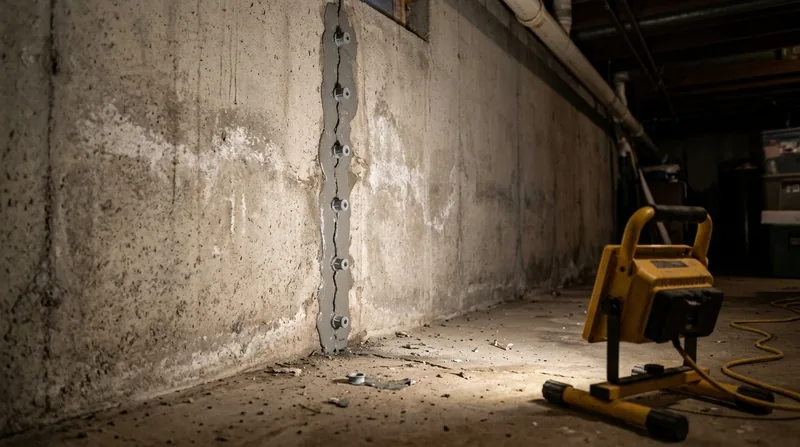




Louisville sits on the Ohio River floodplain and on limestone and shale layered under glacial clay soil, and that geology is why Foundation Crack Repair in Louisville is one of the most requested below-grade services in the metro. From 1880s brick shotgun houses in Germantown and Portland, with their old stone and brick foundations and shallow cellars, to 1980s and 2010s poured-concrete walkouts in Prospect and Oldham County, every era of home here has its own crack pattern. Heavy spring rain, freeze-thaw winters, and hillside runoff against downhill walls all push water into the same foundation joints. We inspect the crack, identify whether it is shrinkage, settlement, or hydrostatic pressure, and match the repair method to the cause instead of patching over it. If you want the full picture of how water moves through your foundation, start with our basement waterproofing service.
Why Foundation Cracks Show Up So Often in Louisville's Older Neighborhoods
The building stock tells the story. Victorians and double-pens in Schnitzelburg and Butchertown sit on shallow, hand-laid foundations that have taken a century of wet winters. Brick Tudors and bungalows in the Highlands, Cherokee Triangle, and Crescent Hill have full basements dug into clay that swells and shrinks with every freeze-thaw cycle. Karst sinkhole pockets in the south metro shift ground under footings, and a high water table in low-lying blocks keeps hydrostatic pressure against walls year after year.
- Vertical cracks in poured walls usually trace back to concrete shrinkage and are often good candidates for epoxy injection.
- Diagonal cracks near corners frequently point to footing settlement on clay over limestone, not to a simple material flaw.
- Horizontal cracks and inward bowing mean soil pressure is winning, and they call for structural evaluation before any injection.
- White efflorescence and damp patches around a crack confirm water is actively moving through it, not just staining the surface.
Reading the crack direction and the moisture around it is the first step before we ever quote a repair.
Key info: A 1920s brick double-pen in Schnitzelburg with a stair-step crack above the stone footing is a settlement question, while a hairline vertical crack in a 1990s Jeffersontown poured wall is usually a shrinkage crack. Same neighborhood, two different repairs.
Permits for structural foundation repair vary by jurisdiction in the Louisville metro. Always confirm current requirements with the Louisville Metro Codes and Regulations before structural work begins.
How We Diagnose and Repair a Foundation Crack in Louisville
We start below grade, not at the surface. The inspection maps the crack on the inside face, checks for efflorescence and moisture, tests whether the crack is active, and looks at grading and downspout discharge outside. Only then do we choose between epoxy injection, polyurethane injection, or a structural repair. You can book the walkthrough through our free basement inspection.
- We photograph and measure the crack, noting width, direction, and whether it is vertical, diagonal, or horizontal.
- We check for active seepage by looking at efflorescence, damp masonry, and water staining after recent rain.
- We inspect the exterior grade, downspout extensions, and any window wells that dump water against the wall.
- We confirm whether the crack is structural by checking for bowing, displacement, or movement at the footing.
- We recommend the method: epoxy injection for structural bonding of non-moving cracks, polyurethane injection for active leaks, or structural repair when movement is present.
- We drill injection ports, flush the crack, inject the material, and finish with surface sealing and cleanup.
Every step is documented so you know exactly what was found and what was done.
Key info: On a 1950s brick ranch in Hikes Point, a vertical crack in the block wall leaked every spring. Polyurethane injection stopped the active seepage, but the real fix was extending two downspouts and regrading the soil line away from the wall.
When the crack is only a symptom of water pressure against the wall, the better answer is often an interior drain tile system that relieves hydrostatic pressure at the footing.
Repair Methods We Match to Louisville Cracks
Not every crack gets the same treatment. We match the method to the crack type, whether it is active, and whether the wall is moving. Here is how the main approaches compare for Louisville homes.
| Approach | Description | Best for |
|---|---|---|
| Epoxy injection | Structural epoxy is injected under pressure to bond cracked concrete back together. | Non-moving vertical cracks in poured walls, 1990s subdivisions in Fern Creek and Prospect. |
| Polyurethane injection | Flexible foam expands and seals active leaks, even in wet cracks. | Active seepage in brick and block, common in Highlands and Clifton basements. |
| Carbon fiber straps | Straps are anchored to the wall to stop inward movement. | Horizontal cracks and early bowing from clay pressure. |
| Wall anchors | Anchors are driven into stable soil outside and tied to the wall to pull it back. | Bowing walls where the wall has moved but is not yet failed. |
| Drain tile relief | Perimeter drainage relieves hydrostatic pressure at the footing. | Recurring cracks and seepage driven by a high water table. |
We explain which row applies to your wall before any work starts.
Foundation Crack Repair Cost in Louisville: What to Expect
Most single-crack injections start at $450, and that figure covers a typical vertical crack in a poured wall with ports, injection, and surface sealing. The price climbs with crack length, active water, difficult access, or when the crack needs structural repair rather than injection. A bowing wall in Anchorage or a settled corner in Shively is a different scope than a hairline shrinkage crack in Middletown.
Getting two or three estimates is smart because crack repair is often quoted without a diagnosis. A contractor who quotes injection without checking for movement may be selling the wrong fix. Ask each bidder how they determined the crack was non-structural. For a broader breakdown of what drives pricing across below-grade work, see our full pricing overview.
Choosing a Foundation Crack Repair Contractor Near Me in Louisville
Hiring right matters more than saving a few dollars on injection material. Ask for proof of licensing and insurance, and confirm the certificate covers below-grade structural work. Get at least two or three written estimates with the diagnosis spelled out, not just a price. Call references from jobs in similar housing stock, because a 1920s Portland cellar and a 2005 Prospect walkout fail differently.
Ask who pulls permits if structural repair or drainage changes are involved. Confirm the warranty terms in writing and whether they transfer. If your neighborhood or HOA has rules about exterior excavation or discharge lines, check those before work starts. You can reach us through our contact page to schedule an inspection.
Foundation Crack Repair in Louisville: Pricing Guide
| Service | Price | Details |
|---|---|---|
| Single crack epoxy or polyurethane injection | Starting at $450 | Includes port drilling, injection, and surface sealing for one typical non-structural crack. |
| Multiple crack injection package | Starting at $750 | Covers several cracks in one visit, with pricing driven by total linear footage and access. |
| Structural repair (carbon fiber or anchors) | On estimate | Requires on-site evaluation of wall movement, soil pressure, and footing condition before pricing. |
| Drain tile relief and crack sealing | On estimate | Combined scope when hydrostatic pressure is driving recurring cracks and seepage at the footing. |
| Travel | Included | In Louisville and surrounding areas, no separate call-out or mileage fee. |
| Estimate | Free | Response within 24h at (502) 679-4421, no obligation to book. |
Indicative pricing, the exact cost depends on square footage, finish, and site access. Free personalized estimate within 24h at (502) 679-4421.


