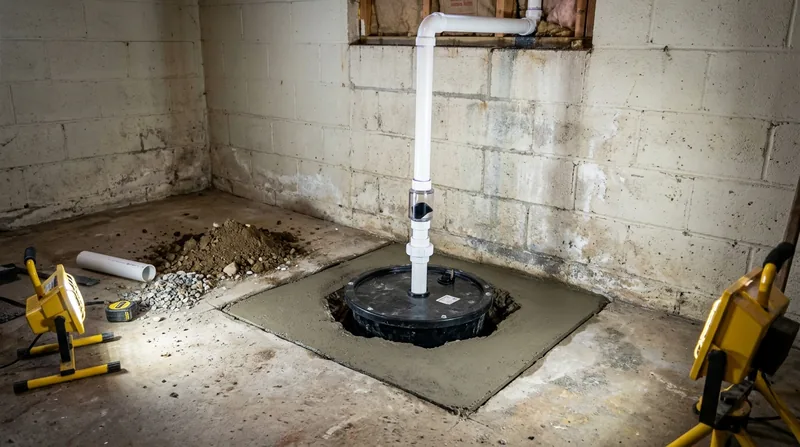




Sump Pump Installation & Replacement in Louisville
Louisville sits on the Ohio River floodplain and on limestone and shale layered under clay soil, which means the water table can climb fast in low-lying neighborhoods like Portland, Butchertown, and along Mill Creek. In the Highlands and Cherokee Triangle, 1910s-1940s brick Tudors and bungalows have full basements that take hillside runoff against downhill walls. Out in Jeffersontown, Prospect, and Fern Creek, 1980s-2010s subdivision homes sit on poured concrete with walkout basements and shallow sump basins that were undersized from day one. When spring thunderstorms dump two inches in an hour, a tired pump or a clogged discharge line turns a dry basement into a wet one. If you need Sump Pump Installation & Replacement in Louisville, we size the pump to the actual inflow, seal the basin, and route the discharge so it carries water well away from the foundation. Start with a free basement inspection and we will tell you plainly whether you need a new pump or a full interior drain tile system.
Why Sump Pump Failure Is the Number One Wet Basement Call in Louisville
Louisville's dominant failure mode is heavy spring and thunderstorm rain overwhelming an undersized or aging pump, not slow groundwater seepage. Homes in St. Matthews, Beechmont, Hikes Point, and Okolona with 1950s-1960s partly finished basements often still run the original cast-iron pump or a builder-grade unit that was never rated for the inflow. In Germantown and Schnitzelburg, shallow cellars on old stone foundations collect water through the footing drain and dump it into a sump basin that has no sealed lid and no check valve. The result is short cycling, burned-out motors, and water backing down the discharge line into the pit.
- We replace undersized pumps with units rated for the actual gallons-per-minute inflow during a storm.
- We install sealed, gas-tight basins that keep soil and debris out of the pit and stop the pump from clogging.
- We add a check valve on the discharge line so water cannot drain back into the basin after each cycle.
- We correct discharge routing so the line exits well away from the foundation and does not freeze or recirculate.
Getting the pump, basin, and discharge right the first time is what keeps a basement dry through a Louisville spring.
Key info: A homeowner in Prospect called us after a July thunderstorm because the sump pump in their walkout basement ran continuously and never caught up. The pump was a 1/3 HP builder unit on a 15-foot head, and the discharge line dumped water two feet from the wall. We upsized the pump, added a check valve, and extended the discharge to the grade break. The basin has stayed dry through every storm since.
For the full picture of how a sump pump fits into a below-grade drainage plan, see the basement waterproofing service page. You can also verify contractor licensing through the Kentucky Department of Housing, Buildings and Construction.
How We Install or Replace a Sump Pump in Louisville Homes
We start by measuring the actual inflow, not guessing from the square footage. On a rainy day we watch how fast the basin fills, check the static water level, and inspect the footing drain and interior perimeter drain that feed the pit. Then we match the pump curve to the discharge head and the volume the system has to move. In older homes in Clifton and Crescent Hill, that often means cutting a new basin in a poured floor or reusing an existing pit with a new sealed lid.
- We inspect the basin, the incoming drain tile, and the discharge line to find the real bottleneck.
- We size the pump to the measured inflow and the vertical lift to the discharge point.
- We set a sealed, gas-tight basin with a proper lid and a gasketed pipe penetration.
- We install a check valve and route the discharge line to daylight or a dry well away from the foundation.
- We test the system under load and confirm the float switch cycles cleanly without short cycling.
Every installation ends with a wet test so you see the pump cycle and the discharge flow before we leave.
Key info: In a 1920s double-pen in Schnitzelburg, the original sump pit was a hand-dug brick-lined hole under the basement stairs. The pump sat in mud and burned out every 18 months. We cut a proper 24-inch basin into the concrete, set a sealed lid, and routed the discharge through the rim joist to the alley side. That pump has run three years without a service call.
If the pump is fine but the drain tile feeding it is collapsed or silted, the fix is a drain tile repair and replacement, not another pump.
Sump Pump Approaches We Use in Louisville
Not every wet basement needs the same hardware. We pick the approach based on the inflow, the discharge head, and whether the home has a finished basement floor we need to protect. The table below shows the main options we install across the metro.
| Approach | Description | Best for |
|---|---|---|
| Primary submersible pump replacement | Swap an undersized or burned-out pump for a correctly sized submersible unit on the existing basin. | Homes with a sound basin and drain tile but a failed pump. |
| New basin and sealed lid | Cut a new sump basin into the floor, set a gas-tight lid, and connect the incoming drain tile. | Older homes with no pit or a hand-dug brick pit that will not hold a modern pump. |
| Discharge line correction | Add a check valve and reroute the discharge to a grade break or dry well away from the wall. | Pumps that short cycle or dump water back against the foundation. |
| High-capacity pump for high water table | Install a larger pump rated for continuous storm inflow in low-lying neighborhoods. | Portland, Butchertown, and creek-adjacent homes that flood fast. |
| Battery backup add-on | Add a battery backup pump that runs when the power goes out during a storm. | Any home where the pump is the only thing keeping the basement dry. |
We will tell you which of these fits your basement after we see the inflow and the discharge route.
Sump Pump Installation & Replacement Cost in Louisville: What to Expect
Most sump pump replacements in Louisville start from $1,200 for a correctly sized submersible pump, a sealed lid, a check valve, and discharge correction on an existing basin. A new basin cut into the floor, a high-capacity pump for a low-lying neighborhood, or a long discharge run to a dry well pushes the number up. The biggest cost drivers are whether we cut a new pit, the pump capacity the inflow demands, and how far the discharge has to travel to reach a safe exit point. Homes in the Highlands and Cherokee Triangle with finished basement floors often need more careful cutting and patching, which adds labor.
Get two or three written estimates and compare the pump model and rated flow, not just the bottom line. A cheap quote on an undersized pump will cost you again after the next storm. Our full pricing overview breaks down the components so you can compare line by line.
What to Look for When Hiring a Sump Pump Contractor Near Me in Louisville
Ask for proof of licensing and insurance before anyone touches your basement floor. A sump pump is a small job with real consequences if the discharge is routed wrong or the basin is not sealed, so the contractor should be able to explain the pump curve and the discharge plan in plain terms. Get at least three estimates and ask each one what pump model and flow rate they propose. Check references from neighborhoods like yours, because a high water table in Portland is a different problem from hillside runoff in Prospect.
- Confirm the contractor carries current liability insurance and workers compensation and can produce a certificate on request.
- Ask whether a permit is required for altering the discharge or the sanitary connection, and let the local building department confirm the rule.
- Request references from jobs in your part of the metro and call them.
- Get the pump model, flow rating, and warranty terms in writing before work starts.
When you are ready, contact us for a free estimate and we will walk the basement with you.
Sump Pump Installation & Replacement in Louisville: Pricing Guide
| Service | Price | Details |
|---|---|---|
| Sump pump replacement on existing basin | Starting at $1,200 | Includes a correctly sized submersible pump, sealed lid, check valve, and discharge correction on a sound existing basin. |
| New sump basin installation | Starting at $1,650 | Includes cutting a new basin into the floor, sealed lid, pump, check valve, and connection to the incoming drain tile. |
| High-capacity pump for high water table | Starting at $1,900 | Includes a larger pump rated for continuous storm inflow, sized to the measured gallons-per-minute in low-lying neighborhoods. |
| Battery backup pump add-on | Starting at $650 | Includes a battery backup pump and charger installed alongside the primary pump to run during power outages. |
| Complex discharge routing or long run | On estimate | Long runs to daylight or a dry well, freeze protection, and sanitary connection changes need an on-site look before pricing. |
| Estimate | Free | Response within 24 hours at (502) 679-4421, no obligation to book. |
Indicative pricing, the exact cost depends on square footage, finish, and site access. Free personalized estimate within 24h at (502) 679-4421.


