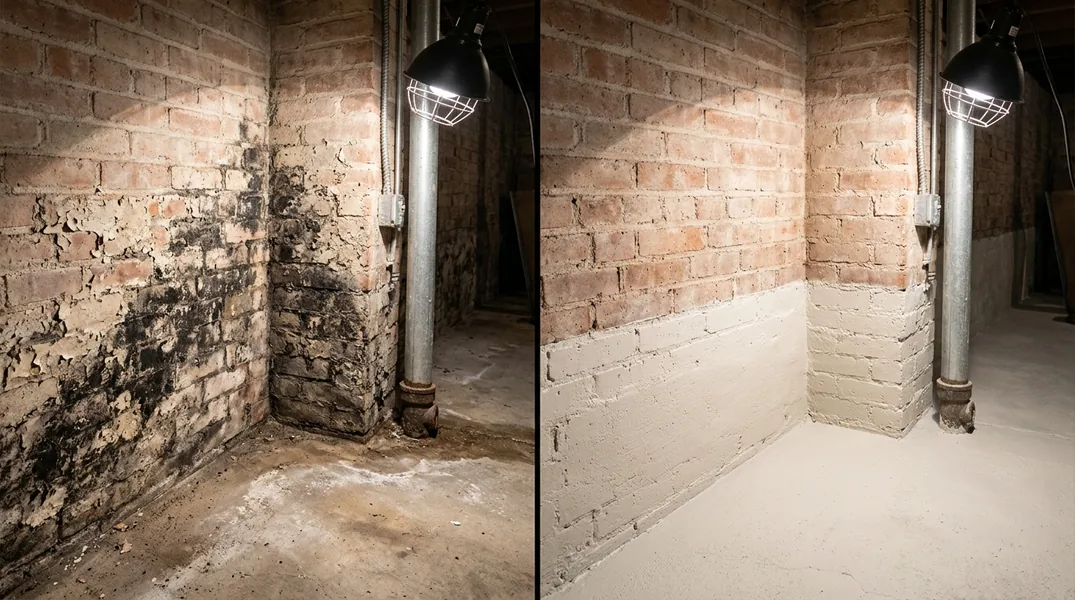
Why Louisville Brick Homes Face Unique Waterproofing Challenges
If you own a brick home in Louisville, you already know that older masonry construction brings character and charm. You may also know that it brings a specific set of water management issues. Brick and mortar are porous materials. They absorb moisture from the soil and release it slowly, but when the ground stays saturated after a heavy rain, that moisture has nowhere to go but inward. Louisville's climate, with its humid summers and occasional heavy downpours, keeps the soil around your foundation wet for extended periods.
Many brick homes here were built before modern drainage standards existed. That means no footing drains, no waterproofing membrane on the exterior walls, and sometimes no vapor barrier under the slab. When you combine aging masonry with clay-heavy soil that drains slowly, you get a recipe for damp basements, efflorescence on the walls, and eventually structural movement. Understanding whether to address the problem from the inside or the outside is the first step toward a dry, stable home. This article breaks down the differences so you can make an informed decision.
Interior vs Exterior Waterproofing: How Each Approach Works
The core difference between interior and exterior waterproofing comes down to where the water is managed. Interior Drain Tile System installation involves breaking up the basement floor along the perimeter, installing a perforated pipe in a gravel bed, and directing water to a sump pit. The water is collected before it can pool on your floor and is pumped away from the house. This method does not stop water from entering the walls, but it controls the water once it reaches the interior, protecting your usable space.
Exterior Basement Waterproofing, by contrast, tackles the problem at the source. The process requires excavating down to the footing, applying a waterproof membrane to the exterior wall, and installing drain tile along the outside of the footing. This approach blocks water from ever touching the foundation wall and relieves hydrostatic pressure from the soil. For brick homes, exterior waterproofing also allows for the installation of a drainage board that protects the membrane and directs water downward. The trade-off is cost and disruption: exterior work is more expensive and requires digging up landscaping, decks, or patios that sit against the house.
Which Method Fits a Louisville Brick Home?
For many brick homes in St. Matthews and older neighborhoods around Louisville, interior drain tile is often the more practical starting point. It addresses the most common symptoms (wet floors, high humidity, sump pump needs) without disturbing mature landscaping or historic hardscaping. It also works well when the foundation walls are structurally sound but water is seeping through mortar joints or the cove joint where the wall meets the floor. An Interior Drain Tile System can be installed in a few days and immediately redirects water away from your living space.
However, if your brick home shows signs of bowing walls, horizontal cracking, or widespread efflorescence, exterior waterproofing may be necessary. These symptoms suggest that hydrostatic pressure from outside soil is actively damaging the structure. In that case, Foundation Waterproofing from the exterior, combined with proper backfill drainage, can stabilize the walls and prevent further movement. Some homes benefit from a hybrid approach: exterior membrane and drain tile on the most affected walls, plus interior drain tile to handle water that enters through the slab or other areas. A professional assessment is the only way to know for sure which path makes sense for your specific brick foundation.
Drain Tile vs Exterior Membrane: Pros and Cons for Brick Foundations
When comparing drain tile vs exterior membrane, think about what each system is designed to do. Interior drain tile is a water collection and removal system. It excels at keeping the basement floor dry and reducing humidity, which is critical for brick because excess moisture accelerates mortar deterioration. It is also less expensive than exterior excavation and can be installed year-round. The downside is that it does not stop water from saturating the brick itself. Over time, repeated wetting and drying cycles can still weaken mortar joints, even if your floor stays dry.
An exterior membrane is a barrier system. It keeps water out of the masonry entirely, which is the ideal scenario for preserving brick. But it comes with higher costs and significant disruption. In Louisville, where many brick homes have established gardens, driveways, or additions close to the foundation, excavation may be impractical. That is why many homeowners choose interior drain tile as a first line of defense and reserve exterior work for structural repairs. A reputable contractor will explain both options and help you weigh the upfront investment against long-term protection. For a clearer picture of what each approach involves, you can request a free estimate from a local specialist.
Basement Waterproofing Cost in Louisville: What to Budget
Homeowners often ask about pricing before choosing a method. Interior drain tile systems are generally more affordable because they require less excavation and labor. Most installations involve breaking out a perimeter trench in the basement floor, laying pipe, and adding a sump pump. Exterior waterproofing costs more because it involves digging out the entire foundation perimeter, applying membrane, and restoring landscaping. For a typical brick home in Jeffersontown or Shively, exterior work can run two to three times the cost of interior work, depending on access and the length of the foundation walls.
It is important to get a detailed written quote that specifies the scope of work, materials, and warranty. Avoid contractors who quote a single price without inspecting your basement or explaining the cause of the water problem. A proper assessment should include checking the exterior grading, downspout discharge, and any visible cracks. Sometimes a combination of regrading, gutter extensions, and interior drain tile solves the problem for far less than full exterior excavation. Ask about financing options and phased approaches if budget is a concern. The goal is to solve the water issue permanently, not just cover it up.
Basement Waterproofing Near Me: When to Call a Louisville Professional
If you are searching for basement waterproofing near me in Louisville, you have probably already noticed dampness, musty odors, or white powder on your brick walls. These are early warning signs that should not be ignored. Brick foundations are resilient, but they are not immune to water damage. Small issues like a clogged downspout or a negative slope can often be fixed with simple landscaping changes. But when water is entering through the cove joint, floor cracks, or mortar joints, it is time for a professional evaluation. Waiting can lead to mold growth, deteriorated mortar, and costly structural repairs.
A local waterproofing contractor can identify the source of the water, recommend the right solution (interior, exterior, or both), and provide a clear estimate. For homeowners in Louisville, choosing a company that understands brick construction is essential. Not every waterproofing method works well with older masonry, and improper repairs can trap moisture and cause spalling. Call Louisville Waterproofing at (502) 679-4421 to schedule an inspection. We serve homeowners throughout the area and can help you decide whether interior drain tile or exterior membrane is the better fit for your brick home. Do not let a small leak become a major headache.
Looking for a professional basement waterproofing contractor in Louisville? Louisville Waterproofing responds fast for all your basement waterproofing needs.
Get a Free QuoteOur services: Basement Waterproofing · Interior Drain Tile System · Exterior Basement Waterproofing